Inlays and Onlays in Crystal Lake, IL
When a tooth is too damaged for a simple filling but doesn’t yet require a full crown, inlays and onlays offer a perfect balance of strength, beauty, and preservation. At Kopp Bloom Full General Dentistry, we use these custom restorations to repair decayed or cracked teeth while maintaining as much of your natural enamel as possible. Designed for durability and a flawless match, they restore both the function and appearance of your smile with precision.
What Are Inlays and Onlays?
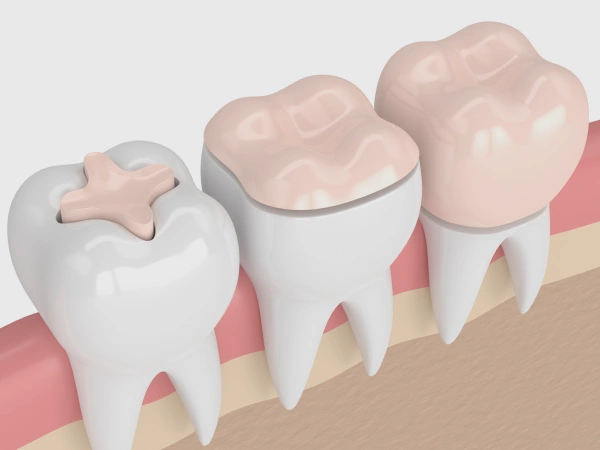
Inlays and onlays are custom-crafted restorations made from high-quality, tooth-colored materials such as porcelain or composite resin.
- Inlays fit within the chewing surface of your tooth, similar to a filling, and are used when damage is contained between the cusps (the raised edges).
- Onlays extend over one or more cusps, offering additional strength and coverage for teeth with more extensive damage.
Both are bonded securely to your tooth, blending naturally with your smile while providing long-lasting protection against further wear or decay.
When Do You Need an Inlay or Onlay?
Your dentist may recommend an inlay or onlay if you have:
- A large cavity that can’t be treated with a standard filling
- A cracked or fractured tooth that’s still structurally sound
- Worn or old metal fillings that need replacement
- Damage that doesn’t warrant a full crown
Inlays and onlays are an excellent way to restore strength and aesthetics while preserving more of your natural tooth structure.
Benefits of Inlays and Onlays
Choosing inlays or onlays offers several key advantages, including:
- Restored strength and stability for damaged teeth
- A natural, aesthetic appearance that blends with your smile
- More preservation of healthy enamel than a traditional crown
- High resistance to staining and wear
- Improved chewing comfort and bite alignment
The Treatment Process
Getting an inlay or onlay is a simple two-step process designed for comfort and precision.
First Visit – Tooth Preparation & Impression
The damaged area is gently cleaned and shaped. We then take precise digital impressions of your tooth to create a custom-fit restoration that matches your natural bite and color.
1
Second Visit – Placement & Bonding
Once your inlay or onlay is ready, it’s carefully bonded to your tooth. The restoration is then polished and adjusted for a perfect fit, leaving your tooth strong, smooth, and natural-looking
2
Restore Your Smile With Confidence
If you have a damaged or weakened tooth, inlays and onlays may be the ideal solution to protect and restore your smile—without the need for a full crown. Schedule your appointment at Kopp Bloom Full General Dentistry today. Our skilled team will evaluate your tooth and recommend the best treatment to help you smile, speak, and chew with confidence again.
Frequently Asked Questions
With proper care, inlays and onlays can last anywhere from 10 to 20 years or longer. Maintaining good oral hygiene, attending regular dental checkups, and avoiding habits like chewing on hard objects will help extend their lifespan.
No, the procedure is comfortable and performed under local anesthesia. You may experience mild sensitivity for a short time afterward, but it typically subsides within a day or two.
Caring for an inlay or onlay is just like caring for your natural teeth. Brush twice a day, floss daily, and see your dentist regularly for cleanings and exams. Avoid biting hard items like ice or hard candy to protect your restoration.
In many cases, yes. Inlays and onlays are stronger, more durable, and provide a better seal than traditional fillings—especially for larger areas of decay. They help reinforce the tooth structure and reduce the risk of future damage. Your dentist will recommend the best option based on your specific needs.
First, the decayed area of the tooth is removed and the remaining surfaces are cleaned. An impression of the tooth is taken, and a restoration is created by a laboratory. A temporary inlay/only is placed onto the tooth. When the permanent inlay/onlay is received from the lab, it is placed onto the tooth and set with a special bonding cement, then polished to a natural looking finish.
Maintaining good oral hygiene is all that is necessary, brushing and flossing daily and maintaining regular dental check-ups.