
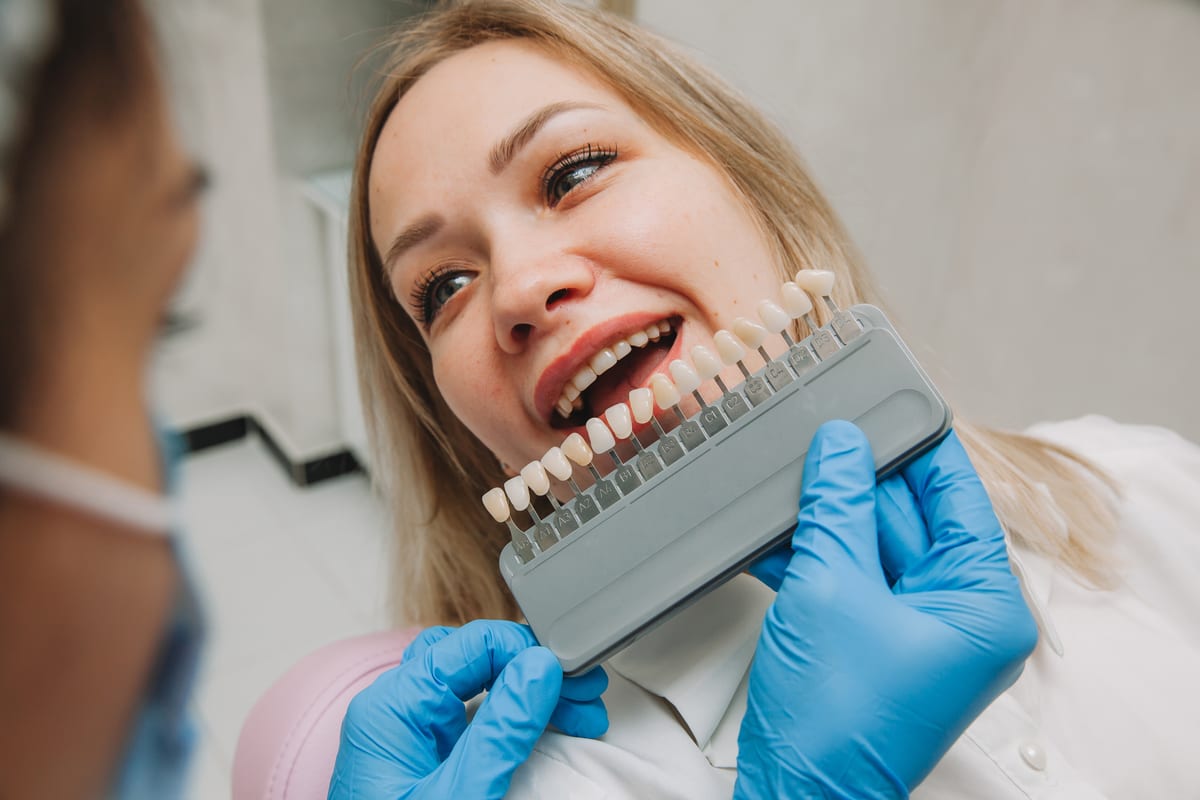
If you’ve been thinking about improving your smile, veneers probably came up. But a lot of patients in Oakwood Hills aren’t sure what dental veneers actually fix — or what they can’t. Understanding what dental veneers actually fix (and what they don’t) in Oakwood Hills helps you make a confident, informed decision. Dr. Thomas Kopp at Kopp Bloom Full General Dentistry for All Ages is here to walk you through it clearly.
What Are Dental Veneers, Exactly?
Dental veneers are thin shells of porcelain or composite resin. A dentist bonds them permanently to the front surface of your teeth. They change the color, shape, size, or surface texture of a tooth.
Think of them like a custom-fitted cover for visible teeth. They don’t replace the tooth structure beneath. Instead, they improve what shows when you smile or speak.
Most veneers are made from porcelain because it mimics natural enamel well. Composite resin veneers are also available and typically cost less. Both types require preparation of the natural tooth surface before placement.
What Dental Veneers Actually Fix in Oakwood Hills
Veneers are highly effective for a specific range of cosmetic concerns. Here is what they reliably correct for patients in Oakwood Hills and surrounding areas.
- Stained or discolored teeth — especially stains that don’t respond to whitening treatments
- Chipped or slightly broken teeth — veneers cover chips on front teeth with a seamless finish
- Minor spacing or gaps — small gaps between teeth can be closed visually with veneers
- Uneven or misshapen teeth — teeth that are too small, pointy, or oddly shaped can be reshaped
- Worn enamel — enamel that has eroded over time can be restored in appearance with veneers
- Minor crookedness — slight misalignment can be masked, though not corrected structurally
These are cosmetic fixes, not structural ones. Veneers change how teeth look. They don’t change how your bite works or how your teeth function underneath.
Results look natural because the porcelain reflects light similarly to real enamel. Dr. Thomas Kopp carefully matches veneer shade and shape to your surrounding teeth. Most patients are surprised at how subtle and realistic the results appear.
What Dental Veneers Cannot Fix
This is just as important as knowing what veneers do fix. Veneers are not a solution for every dental problem. Using them in the wrong situation can actually cause harm.
Here are situations where veneers are not appropriate:
- Severe tooth decay — a decayed tooth needs treatment first, not a cosmetic covering
- Active gum disease — placing veneers over unhealthy gums leads to failure and further damage
- Significant structural damage — a badly cracked or broken tooth may need a crown instead
- Teeth grinding (bruxism) — heavy grinding wears down and cracks veneers quickly
- Severe misalignment — significant crowding or bite problems require orthodontic treatment, not veneers
- Missing teeth — veneers only work on existing teeth; missing teeth require options like Root Canal Treatment for damaged teeth or implants for replacements
Trying to use veneers to cover underlying problems is a shortcut that backfires. Dr. Kopp always evaluates the health of your teeth and gums before recommending veneers. Your long-term oral health always comes first.
Veneers vs. Other Cosmetic and Restorative Options
Sometimes patients come in asking specifically for veneers but actually need something different. It helps to understand how veneers compare to other treatments.
Teeth whitening is a simpler option for surface stains. It doesn’t alter tooth shape or size. For deep or intrinsic stains, though, whitening won’t work and veneers become the better solution.
Dental crowns cover the entire tooth, not just the front surface. A crown is the right choice when a tooth has lost significant structure. Veneers are better suited for teeth that are still largely intact but cosmetically imperfect.
For patients with cavities or sensitivity concerns, preventive care like Dental Sealants may be recommended before any cosmetic work begins. Healthy teeth always come before aesthetic improvements.
Orthodontic treatment like braces or clear aligners corrects alignment issues that veneers cannot. Once your bite and alignment are correct, veneers can then address any remaining cosmetic concerns.
What to Expect During the Veneer Process at Our Crystal Lake Office
Knowing the process helps remove anxiety. Most patients complete veneer treatment over two to three appointments.
Here’s a general overview of what Dr. Kopp’s veneer process looks like:
- Consultation and evaluation — Dr. Kopp examines your teeth, reviews your goals, and confirms you’re a good candidate
- Tooth preparation — a thin layer of enamel is removed from the front of each tooth to make room for the veneer
- Impressions or digital scans — these are sent to a dental lab where your custom veneers are crafted
- Temporary veneers — you may wear temporary veneers while your permanent ones are being made
- Bonding appointment — Dr. Kopp checks the fit, adjusts the shade if needed, and permanently bonds your veneers
The process is minimally invasive compared to other restorations. Most patients experience little to no discomfort during preparation. Local anesthesia is available if needed.
Porcelain veneers typically last 10 to 15 years with proper care. Composite veneers may need replacement or touch-ups sooner. Good oral hygiene and regular dental visits extend their lifespan significantly.
Are Dental Veneers Right for You?
Veneers are an excellent solution for the right candidate. The best way to know if you qualify is a one-on-one consultation with Dr. Thomas Kopp.
Patients near Oakwood Hills can visit Kopp Bloom Full General Dentistry for All Ages in nearby Crystal Lake. Dr. Kopp will evaluate your smile, discuss your goals, and explain every option available to you. There’s no pressure — just honest, patient-centered guidance.
Understanding what dental veneers actually fix (and what they don’t) in Oakwood Hills puts you in a much stronger position to move forward. Book Now to schedule your appointment with our team.
Frequently Asked Questions
Do dental veneers damage your natural teeth?
The veneer process does require removing a small amount of enamel from the front of each tooth. This makes the procedure irreversible. However, the amount removed is minimal and the tooth remains intact and healthy underneath.
How long do porcelain veneers last?
Porcelain veneers typically last between 10 and 15 years. Their lifespan depends on your oral hygiene habits, whether you grind your teeth, and how well you care for them at home and through regular dental visits.
Can veneers fix crooked teeth without braces?
Veneers can mask minor misalignment and create the appearance of straighter teeth. However, they cannot correct bite problems or significant crowding. Orthodontic treatment is the appropriate solution for more serious alignment issues.
Are veneers only for front teeth?
Veneers are almost exclusively placed on front teeth — the ones visible when you smile. Back teeth experience too much chewing pressure for veneers to be practical. Crowns or other restorations are better options for back teeth.
Can I get veneers if I have sensitive teeth?
Tooth sensitivity can sometimes increase after veneer preparation because enamel is removed. Dr. Kopp evaluates sensitivity before recommending veneers. In some cases, underlying issues need to be addressed before veneer placement is appropriate.