

Getting a root canal can feel like a big step—but it’s actually a relief for most patients. The pain is gone, the infection is treated, and your natural tooth is saved. Now comes the important part: how you care for your tooth after the procedure.
If you’ve recently had a root canal in Crystal Lake or are planning one soon, this guide will walk you through exactly what to do—and what to avoid—to heal comfortably and protect your smile for years to come.
Why Post-Root Canal Care Matters
A root canal removes infection from inside your tooth, but the surrounding tissues still need time to heal. The way you care for your mouth in the days and weeks after treatment can directly affect:
- How quickly you recover
- Your level of comfort
- The long-term success of the procedure
Think of it like this: the procedure fixes the problem, but your aftercare protects the result.
What to Expect After a Root Canal
It’s completely normal to experience:
- Mild soreness or tenderness for a few days
- Slight swelling around the treated area
- Sensitivity when chewing
Most Crystal Lake patients are surprised at how manageable recovery is. With proper care, discomfort usually fades within a few days.
Do’s After a Root Canal
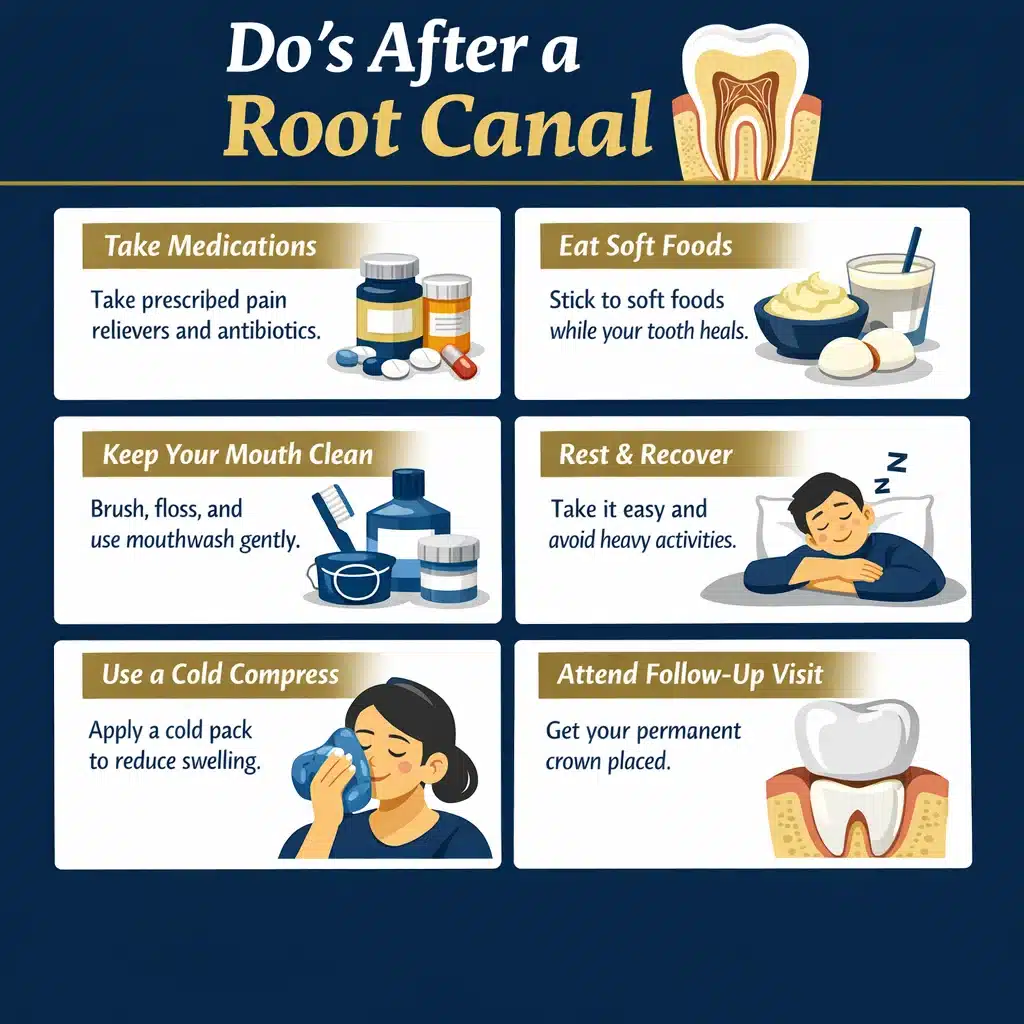
1. Take Medications as Prescribed
Your dentist may recommend pain relievers or antibiotics. Take them exactly as directed—even if you start feeling better early.
2. Eat Soft Foods
Stick to gentle foods for the first few days, such as:
- Mashed potatoes
- Yogurt
- Scrambled eggs
- Smoothies
- Soup (not too hot)
This is especially helpful if you’re grabbing a quick bite from local Crystal Lake cafés or restaurants—just choose softer options.
3. Keep Your Mouth Clean
Oral hygiene is still essential:
- Brush gently twice a day
- Floss carefully around the treated tooth
- Use an antibacterial mouthwash if recommended
Cleanliness prevents reinfection and promotes faster healing.
4. Rest and Let Your Body Heal
Avoid intense physical activity for at least 24–48 hours. Your body heals faster when you give it time to recover.
5. Use a Cold Compress
If there’s swelling, apply a cold pack to the outside of your cheek for 10–15 minutes at a time.
6. Attend Your Follow-Up Appointment
Most root canal treatments require a permanent crown afterward. This step is crucial—it protects your tooth from future damage.
Don’ts After a Root Canal
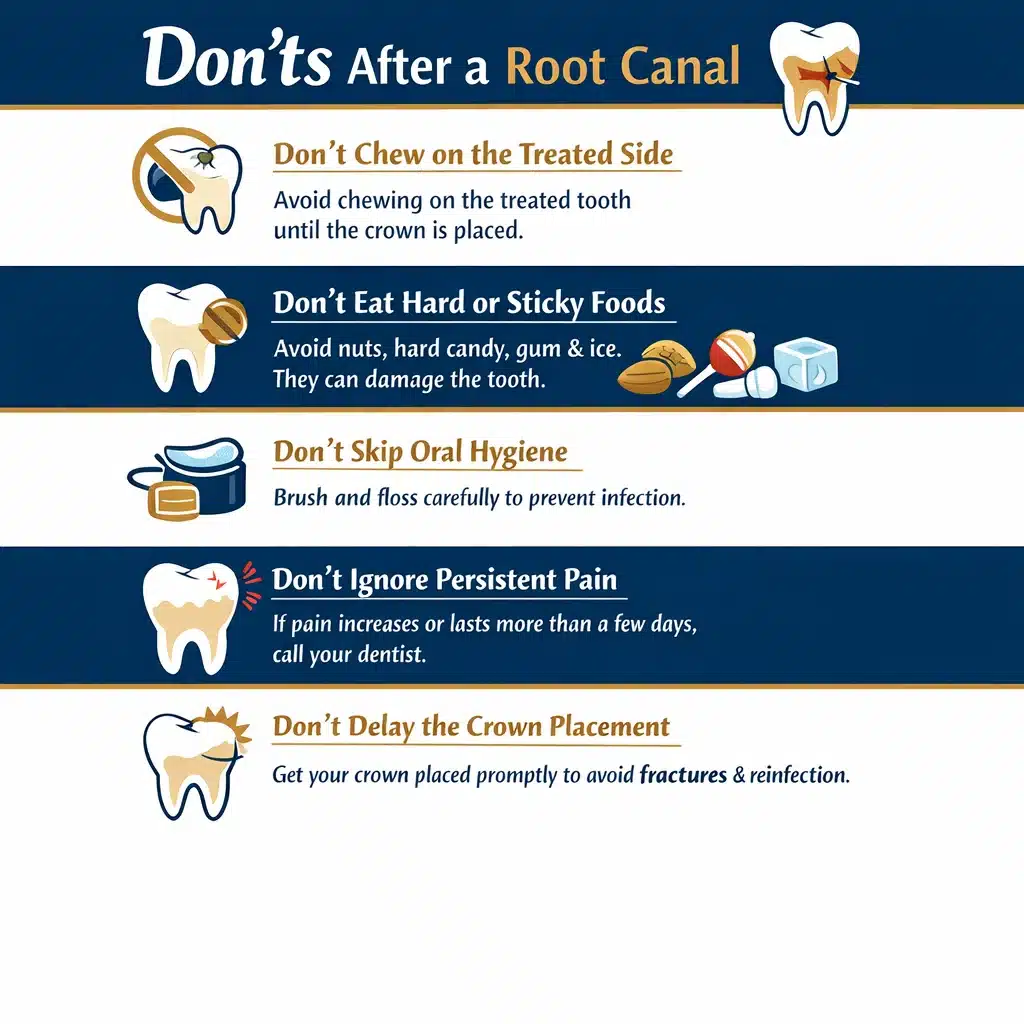
1. Don’t Chew on the Treated Side
Until your permanent crown is placed, the tooth is more fragile. Avoid putting pressure on it.
2. Don’t Eat Hard or Sticky Foods
Stay away from:
- Nuts
- Hard candy
- Chewing gum
- Ice
These can damage the temporary filling or weaken the tooth.
3. Don’t Skip Oral Hygiene
Avoiding brushing or flossing can lead to new infections. Just be gentle around the area.
4. Don’t Ignore Persistent Pain
Some discomfort is normal—but if pain worsens or lasts more than a few days, contact your dentist.
5. Don’t Delay the Crown Placement
This is one of the most common mistakes patients make. Waiting too long increases the risk of:
- Tooth fracture
- Reinfection
- Additional dental work
Local Tips for Crystal Lake Patients
Living in Crystal Lake comes with its own daily routine—whether you’re commuting, enjoying local parks, or dining out. Here’s how to make recovery fit your lifestyle:
- Busy schedule? Plan softer meals ahead of time so you’re not tempted to grab crunchy or hard foods on the go.
- Cold weather sensitivity: Illinois weather can make teeth feel more sensitive—avoid extremely cold drinks right after treatment.
- Active lifestyle: If you enjoy outdoor activities around Crystal Lake, give yourself at least a day or two before jumping back in.
Small adjustments like these can make your recovery smoother and stress-free.
How Long Does It Take to Heal?
Most patients feel back to normal within 3–5 days, though full healing may take a bit longer internally.
Your final crown placement usually happens within a couple of weeks, completing the process and restoring full strength to your tooth.
Signs You’re Healing Well
You’re on the right track if you notice:
- Gradual reduction in pain
- No swelling after a few days
- Comfortable chewing (once crown is placed)
When to Call Your Dentist
Reach out immediately if you experience:
- Severe or increasing pain
- Swelling that doesn’t improve
- Fever or signs of infection
- A cracked or loose temporary filling
Early intervention prevents complications and keeps your treatment successful.
Long-Term Care After a Root Canal
Once your tooth is fully restored, treat it like any other healthy tooth:
- Brush twice daily
- Floss regularly
- Visit your dentist for checkups
- Avoid excessive pressure (like chewing ice)
A properly treated and restored tooth can last a lifetime with good care.
Protect Your Investment
A root canal is more than just a procedure—it’s an investment in your oral health. Following the right do’s and don’ts ensures that your treated tooth stays strong, functional, and pain-free.
If you’ve recently had a root canal or are experiencing symptoms that might require one, getting professional guidance early makes all the difference.
Ready for a Comfortable, Stress-Free Recovery?
At Kopp Bloom Full General Dentistry for All Ages, patient comfort and long-term results are always the priority. Whether you need a follow-up, a crown, or just reassurance that everything is healing properly, expert care is just a call away.
Schedule your appointment today and keep your smile on the right track.
FAQs About Root Canal Aftercare
1. How long should I wait before eating?
Wait until the numbness wears off—usually a few hours. Start with soft foods and avoid chewing on the treated side.
2. Is pain normal after a root canal?
Yes, mild discomfort is normal for a few days. It should gradually improve.
3. Do I really need a crown after a root canal?
In most cases, yes. A crown protects the tooth and prevents fractures.
4. What happens if I don’t follow aftercare instructions?
Ignoring care guidelines can lead to complications like reinfection or damage to the treated tooth.