
Receiving dental implants is a significant step towards reclaiming your smile and regaining your self-esteem. As with any surgical procedure, post-operative care is crucial in promoting optimal healing and ensuring the longevity of your implants. One of the questions patients frequently ask after implants are fitted is: “How long before I can eat normally?” It’s completely natural to want to quickly return to your regular eating habits, as eating plays a crucial role in daily life.
Your implant dentist’s recommendations for eating will depend on several factors, including the complexity of your procedure, the number of implants inserted, and your body’s healing ability. In this blog, we’ll look at information on the healing stages and when you’ll be able to eat normally again after dental implant treatment.
The Recovery Period Following Dental Implants
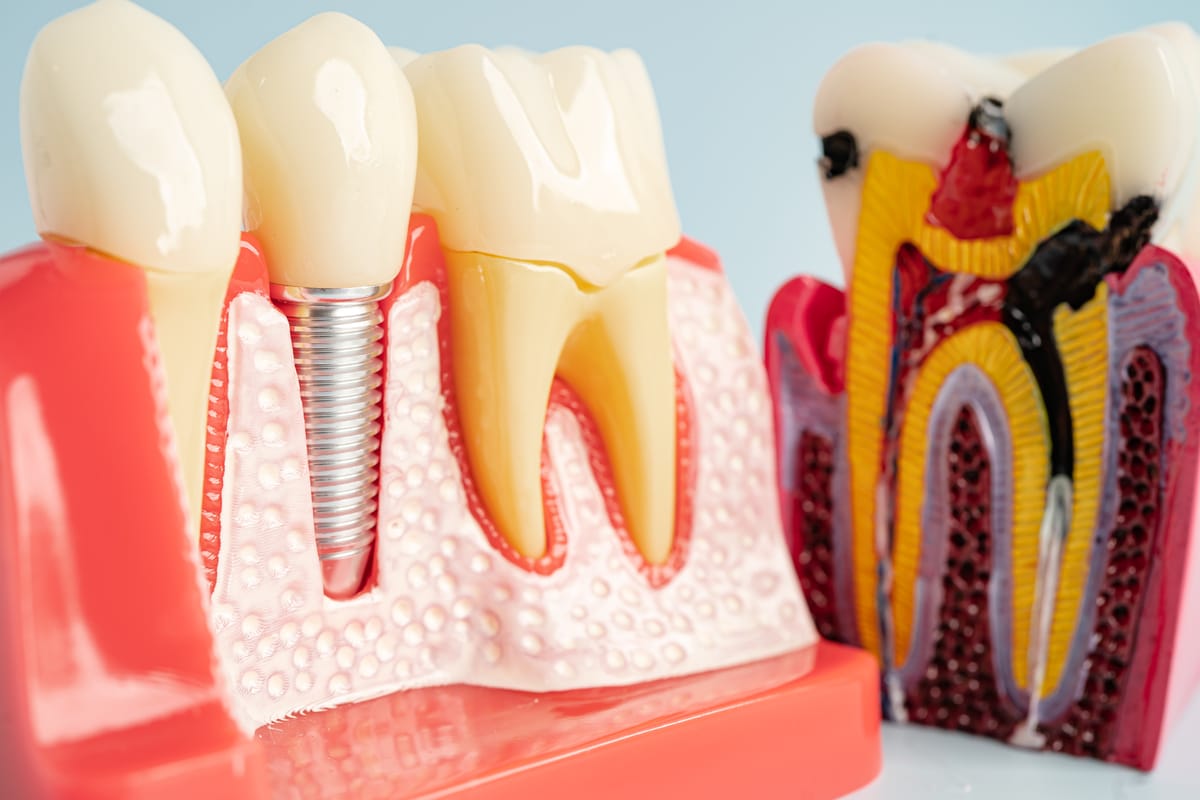
Dental implants are a wonderful option for patients who need to replace missing or damaged teeth. They are incredibly durable, look very natural, and should last many years if you look after them correctly. You must be prepared for a relatively long healing and recovery period following surgery. The stages involve fitting of the implant post, a healing phase, and finally fitting of the crown.
1. Straight After the Surgery
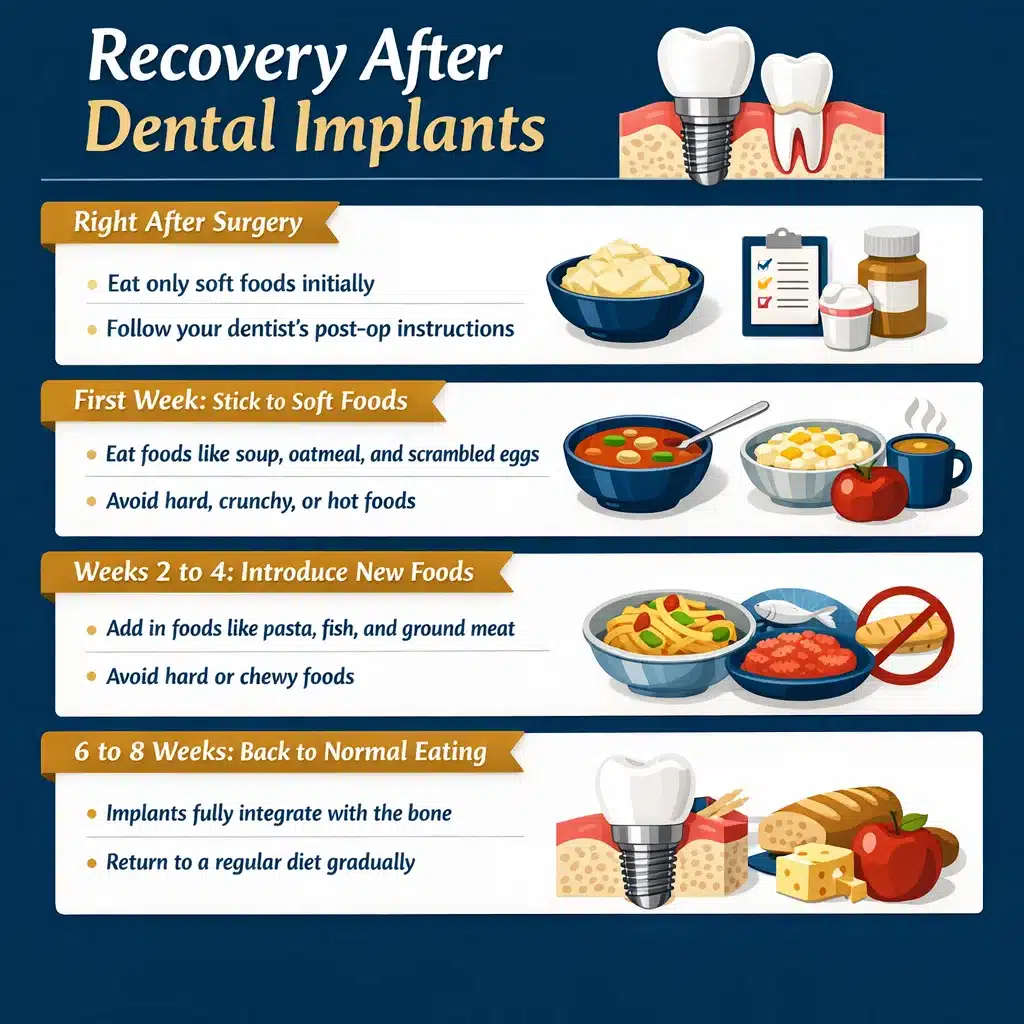
It is extremely important to follow your implant dentist’s post-operative instructions. You will normally be told not to eat solid food for several hours after the procedure, so that the local anesthetic has worn off and you do not injure the gum in that area. Patients are usually advised to eat only soft foods for the first few days, such as mashed potatoes, yogurt, soups, and smoothies.
2. The First Week: Stick to Soft Foods
In the first week after receiving your dental implants, you’ll want to stick strictly to soft foods. Since the posts of your implants must bond with your jawbone, this is the most critical stage of healing for your new teeth.
If you eat hard or crunchy foods, you may disrupt the healing process of the posts, potentially causing implant movement or gum irritation. This week, you should be careful to eat anything that requires very little or no chewing. Some excellent food choices in this first week are:
- Oatmeal
- Soup (ensure no pieces or seeds)
- Scrambled eggs
- Mashed vegetables
Very hot liquids and foods are not a good idea at this time since they could irritate the implant sites.
3. Weeks Two To Four: Gradually Introduce New Foods
About 2 or 3 weeks after your dental implant posts are placed, you will probably feel more comfortable. While you will still need to avoid hard or chewy foods, you can slowly begin adding a few new foods to your diet.
Introduce foods that require some chewing, such as soft pasta, ground meat, or fish, as they will not be as hard on the surgical site as harder foods and will ease your transition back to eating normally. Be careful to keep the implant site away from hard or chewy foods.
4. Six to Eight Weeks: Implant Integration and Eating Normally Again
During the next few months of healing, from around six to eight weeks following your surgery, your implants will osseointegrate with the bone in your jaw, meaning that they will actually fuse with the bone itself. At this point, your implant should be firmly in place, and you can slowly reintroduce solid foods into your diet.
You may still want to be cautious with really tough foods, but for the most part, you should be able to return to eating as you always have. Many patients report that by this stage, their dental implants feel just as stable and comfortable as natural teeth, and they can once again eat, talk, and smile without worry.
Long-Term Care: Maintaining Your Implants and Enjoying a Full Diet
When your implants have healed properly, maintaining them will contribute to their long-term success. With correct maintenance and routine checkups, you will continue to eat all the foods you love and maintain your chewing capability. Here is a step-by-step approach to taking care of your implants long term:
- Routine Checkups: It is important to visit your dentist in Crystal Lake regularly for checkups to ensure your implants remain well-maintained. Checkups help to find problems while they are still minor.
- Proper Hygiene: Good oral hygiene will also help your implants last longer. By brushing and flossing your implants every day, you will prevent plaque buildup and keep both your natural teeth and implants healthy.
- Avoid Sticky And Hard Foods: Although implants allow you to eat just about anything, avoid very hard or sticky foods, such as ice cubes or hard candies, as these can be dangerous to your implants.
- Wear A Night Guard: If you have problems with teeth grinding at night, a night guard will help prevent your natural teeth and implants from being worn down.
- Monitor for Changes: Pay attention to your implants for pain, loosening, or other problems so you can see your dentist in time.
Your dental implants can be a great long-term option for your health and appearance when properly cared for.
Get Back to Eating Normally with Patience
The recovery process after implants varies for each individual, within a matter of weeks, and with careful healing and patience, you can be eating normal food again. It’s essential to follow your implant dentist’s recommendations and stick to softer foods at first to ensure the success of your dental implants.
If you are currently recovering from the procedure or are planning to receive dental implants in the near future, get in touch with Kopp Bloom Full General Dentistry for All Ages in Crystal Lake. Call us today to arrange your next appointment and to start enjoying food to the fullest again. We would be more than happy to answer any questions and ensure your implants heal successfully!
Questions People Ask About Dental Implants
1. How soon can I eat after getting dental implants?
After dental implant surgery, it’s recommended to wait a few hours before eating anything. Soft foods should be introduced within the first few days, and you can gradually return to normal eating after about six to eight weeks.
2. Can I eat after my dental implant surgery on the same day?
You should avoid eating solid foods on the same day as your implant procedure. It’s best to allow the local anesthesia to wear off and stick to soft foods until your gums heal.
3. When can I eat hard foods after dental implants?
Hard foods should be avoided for the first six to eight weeks after dental implants. By this time, your implants will have integrated with the jawbone, allowing you to chew normally.
4. What should I avoid eating after dental implants?
During the recovery period, avoid hard, sticky, or crunchy foods, as well as extremely hot beverages, which can irritate the healing site or interfere with implant stability.
5. Can I drink coffee after dental implants?
It’s okay to drink coffee after dental implants, but avoid very hot coffee in the first few days. Drink lukewarm coffee to prevent discomfort and potential irritation of the surgical site.
6. Are there foods that can help the healing process after dental implants?
Yes, foods rich in vitamins and minerals, such as fruits, vegetables, and soft proteins, can support healing. Soft foods like soups and smoothies are also good choices during the recovery process.