
If you lose a tooth, it can impact far more than your smile. It can affect how you chew and speak, and even the function of your bite over time. With advances in technology, modern dentistry offers permanent solutions for missing teeth, and dental implants are among the most successful methods for restoring them while maintaining healthy jaw function.
For those of you who live in and around Crystal Lake, you may understand just how vital it is to maintain a strong smile for all the moments in your life. If you’re stopping for coffee near the lakefront, dining downtown, or visiting Three Oaks Recreation Area, implants bring back your confidence after a tooth is lost. Knowing how implant treatment works makes you feel confident before starting the process.
Why Dental Implants Are Recommended?
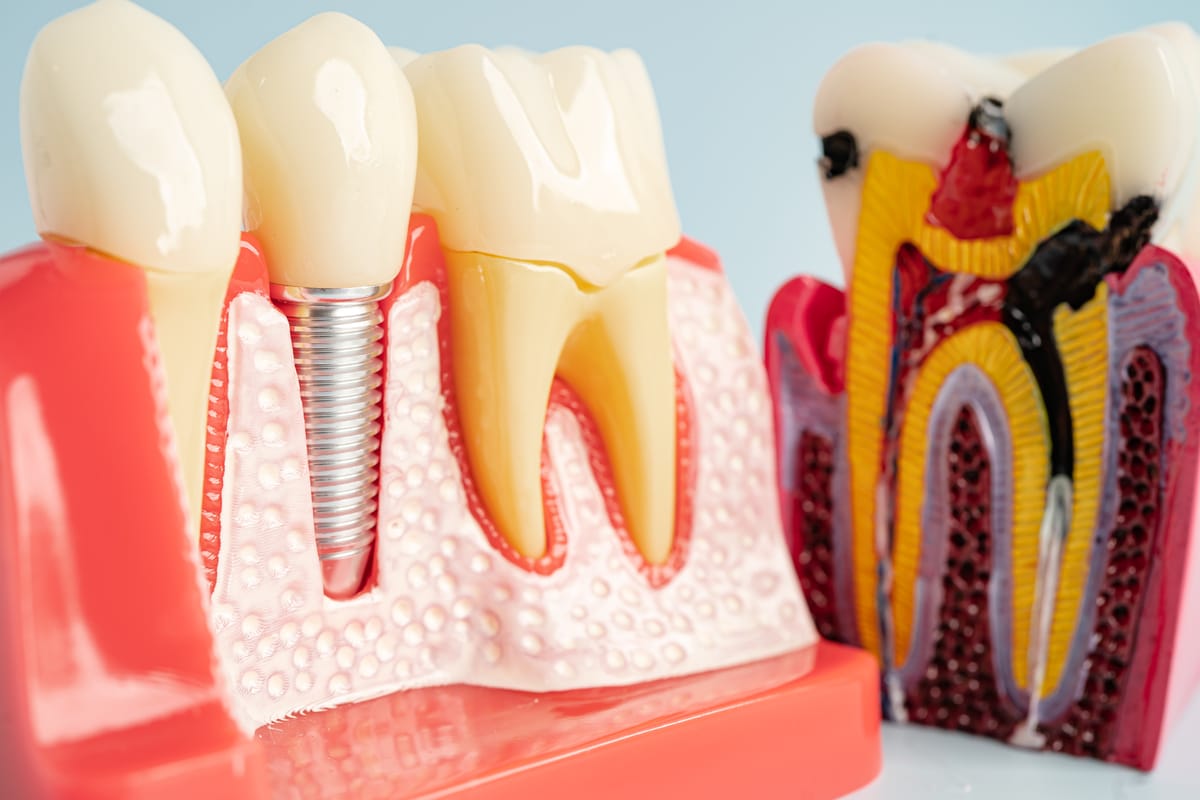
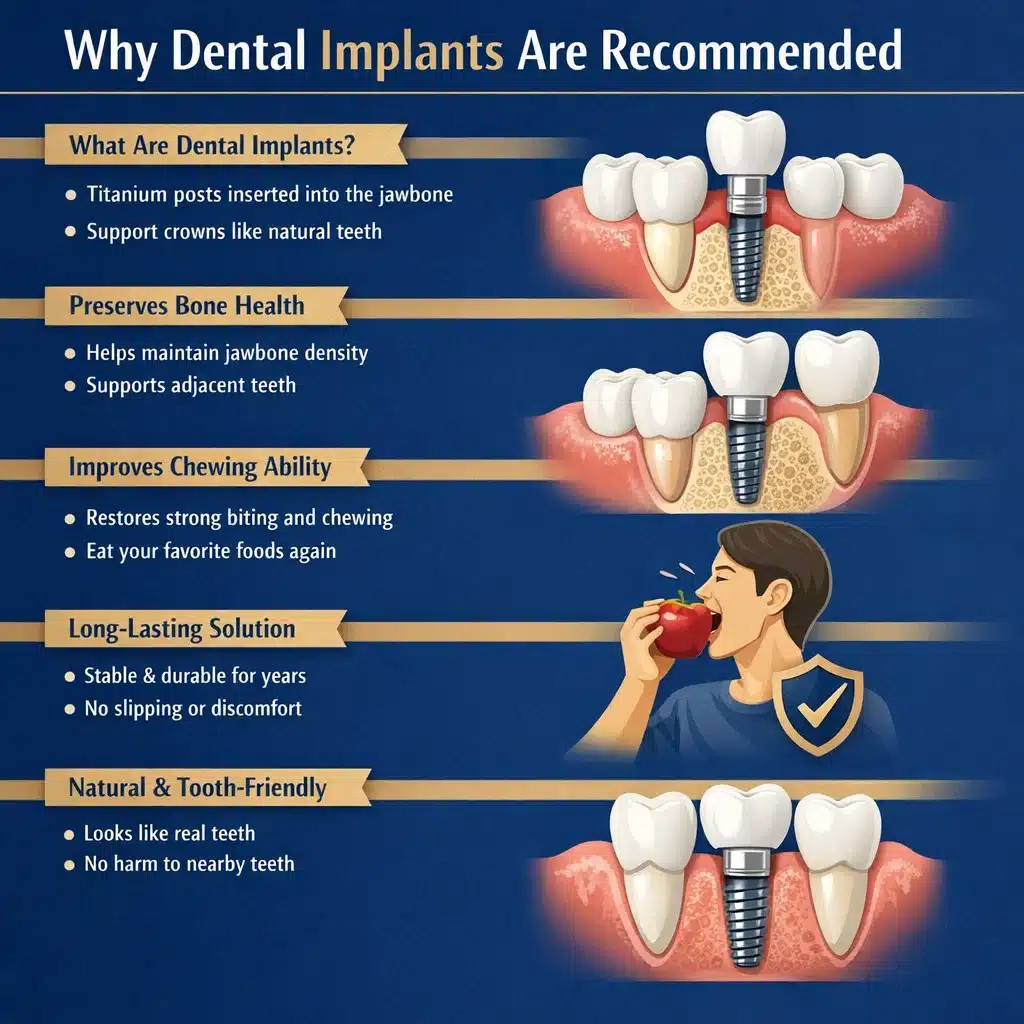
Dental implants are tiny titanium posts that are inserted into the jawbone to serve as replacement tooth roots. Once they integrate with the bone, they provide support for a crown that can look and function like a real tooth.
Contrary to removable choices, implants are integrated into your oral framework. It also helps preserve bone density and supports adjacent teeth.
When people choose dental implants, they want a solution that restores their ability to chew and keeps their smile stable for years.
Key benefits include:
- Enhanced chewing function for regular meals
- Stimulating natural bone activity to preserve the jawbone
- Long-term stability compared with removable restorations
- Mimics the natural look of surrounding teeth
- Nearby teeth are preserved as implants stand alone
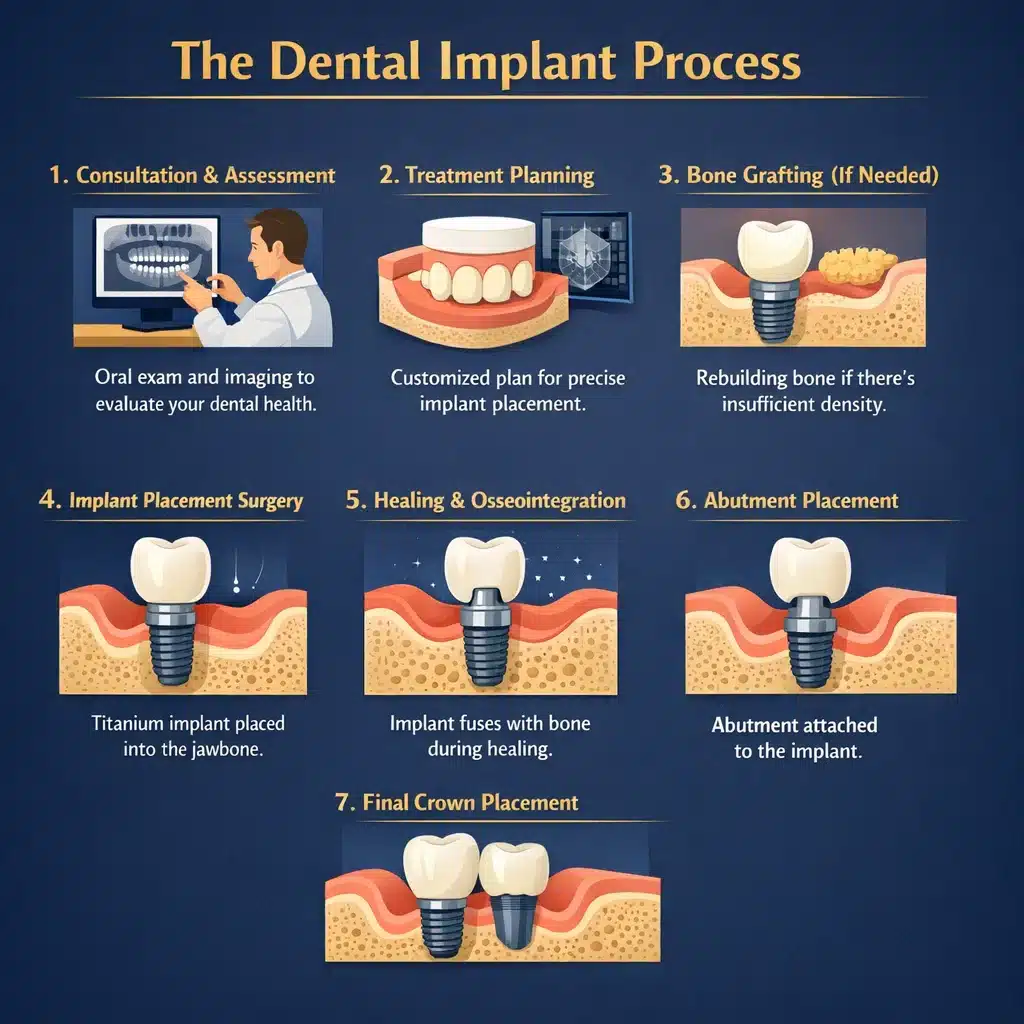
The process is done in stages, with the bone and gums healing properly between steps.
Step 1: Consultation and Assessment
The first step includes a full assessment of your oral health. The implant dentist will look inside your mouth, review your medical history, and assess the condition of your gums and jawbone.
Diagnostic tools for this stage could include:
- Digital X-rays
- Bone structure assessment using 3D imaging
- Bite analysis
- Assessment of gum health
These images help identify if your jawbone can accommodate an implant. If there is insufficient bone density, surgery may be needed to increase it before placing an implant.
This stage also lets patients ask questions and get a sense of what the whole timeline might look like.
Step 2: Personalized Treatment Planning
When the evaluation is complete, a treatment plan is developed. Each patient has a different mouth structure, so the placement of an implant needs to be optimized in relation to existing teeth.
During the planning phase, there are several factors to consider:
- Position of the missing tooth
- Bone thickness and density
- Bite alignment
- Gum health
- Overall oral health condition
Advanced imaging will help determine the exact angle and depth needed to place your implant. Careful planning ensures the final restoration integrates beautifully into a smile.
Step 3: Incision of the Jawbone
In some cases, preparatory procedures are needed before the implant can be placed. Losing teeth can sometimes cause the bone to shrink over time, especially when a tooth has been absent for years.
Preparation may include:
- A bone graft where the jawbone is rebuilt
- Sinus lift for upper back teeth
- If there is inflammation, gum treatment
These procedures provide a baseline context for implant stability. Rehabilitation can take several months, but it significantly improves long-term prospects.
Step 4: Implant Placement Surgery
The next step is to implant titanium into the jawbone. The procedure is performed through a small surgical treatment using local anesthesia.
The steps typically include:
- Making a tiny hole in the gum tissue
- This is done with specialized instruments that prepare the bone
- Insertion of the implant into the jaw
- Sewing the gum tissue over or around the implant
- Once placed, the implant becomes a new artificial root.
At this stage, the bone undergoes a natural healing process called osseointegration in which bone cells grow around the implant surface and lock it in position.
Step 5: Healing and Osseointegration
Healing is a critical phase. The process called osseointegration makes sure the implant is permanently held in place by the jawbone.
This stage typically takes three to six months, depending on individual healing trajectories.
This step involves:
- Adhesion of bone cells on the surface of the implant
- The implant becomes solid enough to hold a crown
- A small amount of gum tissue heals around the site
Patients often can resume normal activities within days of surgery.
Step 6: Abutment Placement
Once healed, a small connector piece called an abutment is placed on the implant.
The abutment is the connection between the implant and the final crown.
This stage usually involves:
- Reopening the gum tissue slightly
- Connecting the abutment to the implant
- The gum needs to heal around the abutment
The abutment sits slightly above the gumline and serves as the base for the final restoration.
Step 7: Making the Custom Crown
Once the gums have healed and closed around the abutment, impressions are made for the crown.
A dental laboratory fabricates a restoration to fill in that is:
- Tooth color
- Size and shape
- Bite alignment
The objective is to ensure the new tooth looks no different from the neighboring teeth.
Once the crown is prepared, it is fixed in place on the abutment, and the process concludes.
What Recovery Looks Like
Recovery is different for everyone, but most patients recover quickly and return to their regular routines shortly after the implants are placed.
Helpful recovery tips include:
- Follow post-procedure care instructions carefully
- Continue brushing and flossing well
- Taking care not to put undue pressure on the implant area while it heals
- Attend follow-up visits as recommended
- Maintaining good oral hygiene practice with your pets
Proper care while you heal will aid the long-term success of your device.
Why the Process Happens in Steps
Although a dental implant procedure can take several months to complete, the process is divided into several phases, each serving an important purpose.
Gradual treatment allows:
- Bone is to integrate completely with the implant
- Gum tissue to heal properly
- The final crown fit perfectly
- Long-term stability for the restoration
Though the process takes some patience, the outcome is often like having a natural tooth again.
Restore Your Smile With Confidence
When dental implants are placed, the process allows for natural healing of the jawbone and gums at every step in a coordinated way. It can take time, but the end result can bring back function and also comfort in daily living.
For those considering dental implants in Crystal Lake, our team at Kopp Bloom Full General Dentistry can help determine if this procedure is right for you. The first step in restoring a healthy, beautiful smile is to schedule a consultation with us today.
Questions People Ask About Dental Implants
How long does the dental implant process usually take?
The entire process typically takes several months because healing must occur between stages. Bone integration alone can take three to six months. Additional procedures, such as bone grafting, may extend the timeline slightly but help ensure stable implant support.
Are dental implants suitable for everyone?
Most adults with good oral health can be candidates. Adequate jawbone density and healthy gums are essential. An implant dentist will evaluate medical history, oral health, and bone structure before recommending the procedure.
What happens if a tooth has been missing for years?
Long-term tooth loss can lead to bone shrinkage. In many cases, bone grafting can rebuild the jaw structure to support an implant. Imaging helps determine whether additional preparation is necessary.
How should I care for an implant after placement?
Implants require the same care as natural teeth. Daily brushing, flossing, and routine dental visits help maintain gum health. Good hygiene prevents inflammation that could affect the implant area.
Do dental implants feel different from natural teeth?
Once healing is complete, implants often feel very similar to natural teeth because they are anchored directly in the jawbone. This allows for stable chewing and natural speech without movement.
Can dental implants support multiple missing teeth?
Yes. Implants can support single crowns, bridges, or even full-arch restorations. The treatment plan depends on how many teeth are missing and the condition of the jawbone