

Tooth pain can strike unexpectedly and make daily life nearly impossible. Whether it’s a sharp, shooting pain or a persistent dull ache, knowing how to manage discomfort at home can help you stay comfortable until professional care is available. While home remedies aren’t a substitute for proper treatment, taking quick, careful action can prevent the situation from worsening.
If you’re in Crystal Lake and dealing with severe tooth pain, understanding what to do while waiting to see a professional can save you from extra discomfort—and potentially avoid complications.
If you are facing severe tooth pain or a sudden dental emergency, call us at (815) 477-4055.
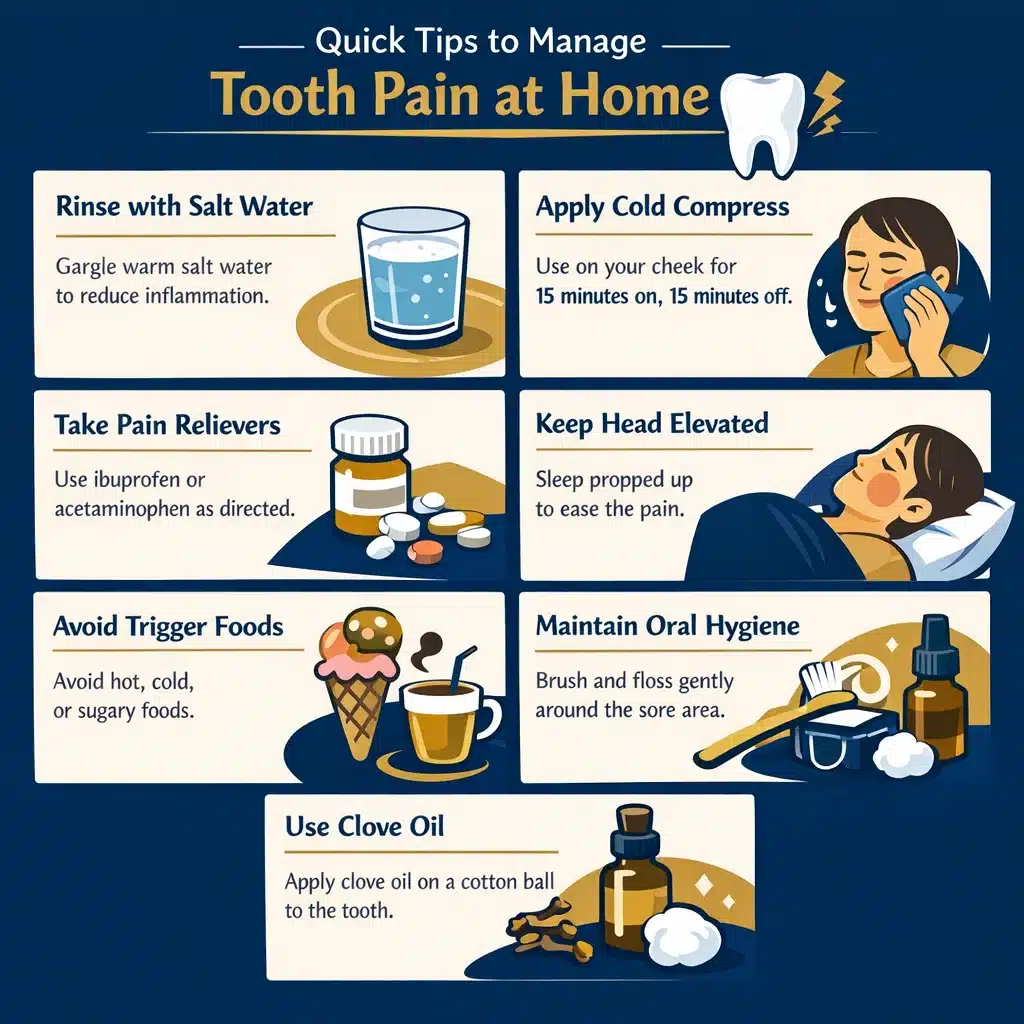
Quick Tips to Manage Tooth Pain at Home
Here are practical, immediate steps you can take when severe tooth pain strikes:
- Rinse Your Mouth With Warm Salt Water
Saltwater helps reduce inflammation, cleanses the area, and temporarily relieves pain. Mix a teaspoon of salt in a cup of warm water and rinse gently. - Use a Cold Compress
Applying a cold compress to the outside of your cheek can numb the area and reduce swelling. Alternate 15 minutes on, 15 minutes off to avoid skin irritation. - Over-the-Counter Pain Relief
Ibuprofen or acetaminophen can help manage pain temporarily. Always follow dosage instructions carefully, and avoid placing aspirin directly on your tooth or gums—it can cause irritation. - Keep Your Head Elevated
Lying flat can increase pressure and worsen tooth pain. Try sleeping propped up on pillows to reduce discomfort. - Avoid Trigger Foods and Drinks
Hot, cold, or sugary items can aggravate tooth pain. Stick to soft, lukewarm foods until the pain subsides. - Maintain Oral Hygiene
Gently brushing and flossing can prevent further irritation or infection. Be careful around the painful area to avoid worsening the discomfort. - Use Clove Oil for Temporary Relief
Clove oil has natural analgesic properties. Apply a small amount to a cotton ball and place it on the affected tooth for temporary relief.
When to Seek Professional Help
While these home remedies can help, they are temporary solutions. Persistent or severe tooth pain often signals a deeper issue, such as:
- Tooth decay or cavities
- Infections or abscesses
- Cracked or fractured teeth
- Gum disease or inflammation
If the pain lasts more than a day, is worsening, or is accompanied by swelling, fever, or difficulty swallowing, it’s time to contact an emergency dentist. In Crystal Lake, Kopp Bloom Full General Dentistry for All Ages, offers prompt care for urgent dental situations, ensuring you get relief quickly.
Why Acting Quickly Matters
Ignoring severe tooth pain can lead to worsening infections, tooth loss, or more invasive treatments down the line. Acting promptly—using safe home remedies and contacting an emergency dentist—helps protect your oral health and ensures faster recovery.
At Kopp Bloom Full General Dentistry for All Ages, we understand that dental emergencies can be stressful. Our team in Crystal Lake is ready to provide fast, compassionate care for patients of all ages. Don’t wait—call (815) 477-4055 now if you’re experiencing severe tooth pain.
FAQs About Severe Tooth Pain
Can tooth pain go away on its own?
Minor discomfort may ease temporarily, but persistent tooth pain usually indicates an underlying issue that requires professional attention.
Is it safe to use home remedies for a toothache?
Yes, home remedies like saltwater rinses, cold compresses, and OTC pain relievers are safe for short-term relief. Avoid placing medications directly on the gums.
How soon should I see a professional?
If pain lasts more than 24 hours, worsens, or comes with swelling or fever, contact an emergency dentist immediately.
Are abscesses dangerous?
Yes. Dental abscesses can lead to serious infections if untreated. Seek professional care as soon as possible.
Can a cracked tooth cause severe pain?
Absolutely. A fracture may expose nerves or allow bacteria to enter the tooth, causing sharp pain or sensitivity.